Tropical Leaves & Hibiscus Graphics: A Designer's Review
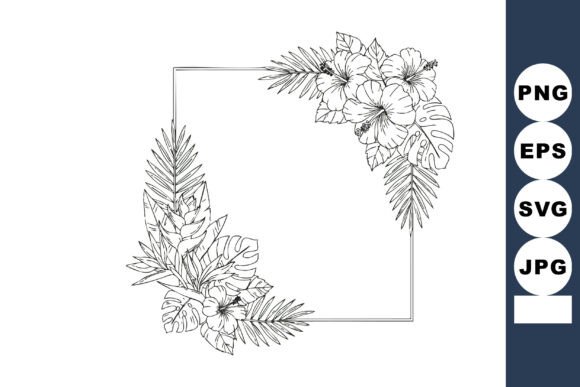
As a graphic designer constantly scouting for assets that balance aesthetic appeal with practical utility, my first impression of the Tropical Leaves and Hibiscus Flowers Dec was one of refined simplicity. In an era where design trends often swing wildly between chaotic maximalism and sterile minimalism, this asset lands in a sweet spot: elegant line art that feels organic without being messy. The visual mood it creates is immediately transporting; it evokes the humidity of a rainforest and the softness of a sunset, yet maintains the clean lines necessary for professional branding. For a designer working on a project for a handmade business or a boutique product line, this kind of graphic design asset offers a shortcut to establishing a specific atmosphere without the need to illustrate complex botanical details from scratch.
Setting the Mood for Boutique Branding
I recently evaluated this collection while developing a visual concept for a client launching a small-batch skincare line inspired by island botanicals. The brief required packaging that felt luxurious yet approachable, avoiding the cliché of overly saturated, cartoonish tropical imagery. The Tropical Leaves and Hibiscus Flowers Dec fit this direction perfectly. The delicate nature of the line work suggests sophistication, making it ideal for brand identity projects where trust and quality are paramount. Unlike heavy, solid illustrations that can dominate a layout, these elements act as graceful accents. They frame content rather than competing with it, allowing the typography and product photography to remain the heroes of the design.
When considering marketing visuals for social media, this asset shines in creating cohesive campaign aesthetics. Whether used for Instagram story highlights, Pinterest pins, or blog headers, the consistent stroke weight ensures that the visual hierarchy remains intact. It supports the narrative of a brand that values natural ingredients and artisanal processes. For content creators and bloggers in the lifestyle niche, integrating these illustrations into Canva templates can instantly elevate the perceived value of their digital products.
Versatility Across Print and Digital Media
The true test of any digital product in a designer's toolkit is its adaptability across various mediums. This vector collection proves its worth in both print and digital applications. For packaging design, the SVG and EPS files included in the download are invaluable. They allow for infinite scaling without loss of quality, which is critical when applying artwork to everything from small product labels to large shipping boxes. I tested the scalability by placing the hibiscus frame on a mockup for a candle jar, and the lines remained crisp and defined, proving its suitability for high-resolution printable design tasks.
In the realm of print-on-demand and merchandise, the potential is equally strong. The clean line art style translates exceptionally well to t-shirt design, tote bags, and mug wraps. Because the design relies on contour rather than solid fills, it works beautifully on colored fabrics, provided there is sufficient contrast. For sellers on Etsy or those managing a handmade business, this asset serves as a robust foundation for sublimation design projects. The PNG files with transparency make it easy to layer these floral elements over textured backgrounds or photographic product shots without unsightly white boxes interfering with the composition.
Furthermore, for crafters using cutting machines, this is a prime candidate for a Cricut project. The clear paths in the vector file mean that vinyl cuts should be precise, making it excellent for creating custom sticker design sheets or decorative decals for laptops and water bottles. The versatility extends to editorial design as well; dropping these graphics into a magazine layout or a lookbook can break up text-heavy pages with visual breathing room that feels intentional and curated.
Strategic Placement and Design Constraints
While the Tropical Leaves and Hibiscus Flowers Dec is a powerful tool, experienced designers know that context is everything. This asset works best in large layout areas where the intricacy of the line work can be appreciated. It excels as a hero graphic on a landing page, a decorative border on an invitation suite, or a central motif on packaging. However, caution is advised when using it in very small sizes, such as favicons or tiny social media profile icons. At reduced scales, the delicate lines of the leaves and petals may blur or disappear, compromising the visual trust and professionalism of the brand.
Additionally, this design requires careful consideration regarding background complexity. Because it is a line art style, placing it over a busy or low-contrast background can render it illegible. It demands negative space to breathe. For projects requiring a strictly minimalist corporate aesthetic or those needing very rigid visual structures, this organic, flowing style might feel too soft. It is best reserved for brands that want to convey warmth, creativity, and a connection to nature. When used in crowded layouts, the frame can get lost, so it should be treated as a focal point or a dedicated section divider rather than a repetitive pattern tile.
Technical Performance and File Utility
From a technical standpoint, the inclusion of multiple file formats—SVG, EPS, JPG, and PNG—demonstrates a thoughtful approach to user needs. The vector formats (SVG and EPS) are essential for any serious commercial design work, allowing me to modify stroke weights, change colors to match specific brand palettes, and isolate individual elements like a single hibiscus flower or a specific leaf cluster. This editability is crucial for maintaining brand consistency across different touchpoints.
Before finalizing any client project, I always run a series of practical checks. First, I test the design in black and white to ensure the contrast holds up without relying on color psychology. Second, I preview the asset on both light and dark backgrounds to verify visibility. Third, I inspect the PNG transparency to ensure there are no jagged edges or halos around the lines. Finally, comparing how the organic curves of the hibiscus interact with different typefaces is vital. I found that this illustration pairs wonderfully with elegant serif fonts for a luxury feel, clean sans-serif fonts for a modern look, and even handwritten scripts for a personal, artisanal touch. However, pairing it with overly decorative display fonts can create visual clutter, so restraint is key.
Ultimately, the Tropical Leaves and Hibiscus Flowers Dec is more than just a pretty picture; it is a functional component of a larger design strategy. For small business owners, marketers, and fellow designers, it offers a reliable way to inject personality and elegance into a project. As long as one respects its limitations regarding scale and background contrast, this design bundle is a worthy addition to any creative library, ready to enhance everything from web design elements to physical product mockups. Just remember to always confirm the commercial license terms before deploying it for client work to ensure full compliance and peace of mind.