Rabbit in Flowers: Graphics and Illustrations for Brands
As a brand designer who has spent years refining visual identities for local businesses, I approach every new graphic design asset with a critical eye. It is not just about whether an image looks cute on a screen; it is about whether it can carry the weight of a real-world brand identity. When I first opened the archive for Rabbit in Flowers, my immediate impression was one of softness and organic charm. This is not a stiff, corporate vector; it breathes with a handmade quality that suggests warmth, approachability, and a touch of whimsy. For the right client, this mood is invaluable. It speaks directly to consumers looking for authenticity, making it a perfect fit for boutique owners, handmade soap creators, artisanal bakeries, or floral shops that want to distance themselves from mass-produced aesthetics.
Evaluating the Mood and Brand Personality
The core strength of Rabbit in Flowers lies in its ability to establish an emotional connection before a customer even reads a product description. The interplay between the animal subject and the botanical elements creates a narrative of nature, gentleness, and care. In the context of small business branding, this is gold. If you are launching a line of organic skincare products or a children's clothing brand, this illustration instantly communicates safety and natural ingredients. It feels feminine without being overly delicate, and playful without losing professionalism. However, for a high-end luxury watch brand or a stark, minimalist tech startup, this asset would likely feel out of place. It thrives in environments where the brand story is rooted in community, craft, and the natural world.
Practical Applications for Local Business Packaging
When considering how to deploy these files in a real project, the versatility is surprising. Because Rabbit in Flowers comes as a comprehensive package, the potential applications for packaging design are extensive. Imagine a local honey producer needing a standout product label. Placing this illustration as the hero graphic on a jar label immediately draws the eye on a crowded shelf. Similarly, for a boutique candle maker, this design could serve as a beautiful accent on a hang tag or a thank-you card included in the box.
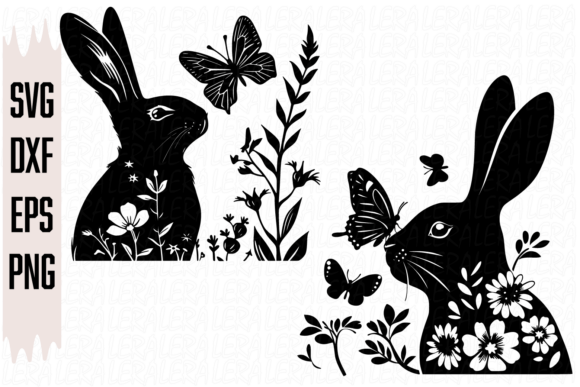
The technical delivery of this asset supports these varied uses effectively. You get 2 individual files contained within a single download. These files are provided in svg, dxf, eps, and png formats, all packed in a zip archive that needs to be extracted before use. Having the vector formats (SVG, EPS, DXF) is crucial for a professional designer. It means I can scale the rabbit and flowers to any size—from a tiny sticker on a macaron box to a large banner for a storefront window—without losing resolution. The PNG files offer immediate usability for social media managers who need quick, transparent backgrounds for Instagram stories or Facebook ads.
Enhancing Visual Hierarchy and Customer Trust
Incorporating Rabbit in Flowers into a brand suite does more than just decorate; it structures the visual experience. A strong illustration helps define the visual hierarchy of a package, guiding the customer's eye to the brand name and key product benefits. When a local business uses high-quality illustrations like this, it signals investment and care. Customers subconsciously associate polished, cohesive marketing visuals with higher product quality. Whether used on a menu graphic for a café or a price list for a florist, consistent use of this imagery builds recognition. Over time, that rabbit becomes synonymous with the business itself, fostering loyalty and trust.
Strategic Placement and Design Caution
While Rabbit in Flowers is a powerful tool, it must be used strategically. It works best as a focal point on product labels, as a decorative border on packaging accents, or as the central element in seasonal campaign visuals. It shines in boutique visuals and social media graphics where the goal is to evoke a feeling. However, there are scenarios where caution is required. You should avoid using this level of detail on very small labels where the fine lines of the flowers might blur during printing. It is also not suitable for areas dense with legal information or ingredient lists, as the decorative nature of the clipart could compete with legibility. Furthermore, for brands aiming for a ultra-luxury, minimalist aesthetic, this illustration might feel too busy or informal.
Designer Notes for Professional Execution
Before finalizing any commercial design project with these assets, I always follow a strict checklist to ensure professional branding standards are met. First, test the illustration on real product mockups. See how the colors interact with your specific packaging material, whether it is kraft paper, glossy plastic, or glass. Second, always check the black and white usage. Will the design hold up if printed in a single color for cost-saving on receipts or flyers? Third, preview the asset on small scales to ensure the details remain distinct.
Typography pairing is another critical factor. Rabbit in Flowers pairs beautifully with serif fonts for a classic, editorial look, or handwritten fonts to enhance the handmade vibe. Avoid pairing it with overly geometric sans-serif fonts unless you are aiming for a specific modern contrast. Finally, and most importantly, confirm the commercial license. While these design assets are perfect for invitations and party decor as suggested by the creator, ensure your specific use case—whether for a digital product, physical goods, or broad advertising—is covered. By treating these files with the rigor of a professional editorial design or web design project, you transform a simple download into a cornerstone of a successful brand identity.