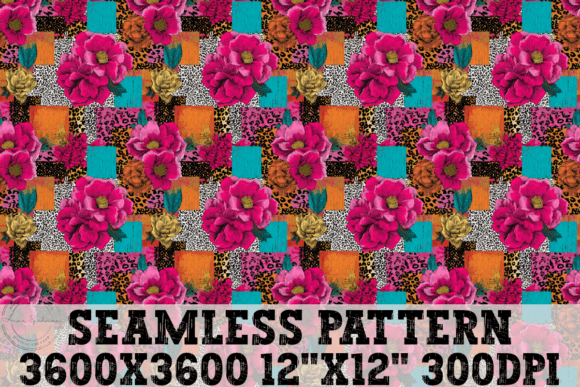
Patchwork Flowers Qult: A Designer's Review for Embroidery
As a designer who spends more time hooping fabric than I do sleeping, I am always skeptical of digital assets that promise versatility without showing the stitch map. When I first encountered Patchwork Flowers Qult, my initial reaction was one of curiosity mixed with caution. The product is listed under Illustrations and Graphics, specifically as a seamless pattern in .PNG format at 300 dpi. For an embroidery professional, this immediately raises a critical question: how does this high-resolution graphic translate into a tangible machine embroidery design? This review isn't just about the visual appeal of the download; it is a practical evaluation of how this asset performs when you are trying to create a sellable finished product for a client or your own craft business.
The Visual Mood and Design Personality
The first thing that strikes me about Patchwork Flowers Qult is its nostalgic yet modern charm. The layout suggests a quilted aesthetic, utilizing geometric segmentation to create floral motifs that feel both structured and organic. As an Illustration, the color palette is vibrant, but as a designer planning a physical item, I look past the screen colors to imagine the thread choices. The "patchwork" style implies distinct sections, which is excellent for managing stitch density. Unlike a solid fill that can cause puckering on lightweight fabrics, a segmented design allows for natural breaks in the stitching, giving the fabric room to breathe.
This visual personality makes it incredibly versatile. It doesn't scream "childish" nor does it feel overly formal. It sits comfortably in that sweet spot for boutique branding—whimsical enough for a nursery, but stylish enough for a trendy tote bag. If you are an Etsy seller looking to expand your catalog beyond basic monograms, this graphic offers a unique texture that stands out in a crowded marketplace.
Real-World Application: The Tote Bag Test
To truly evaluate Patchwork Flowers Qult, I mentally projected it onto a specific real-life scenario: a custom canvas tote bag for a local farmer's market vendor. This is a common request for small shop owners. Canvas is a sturdy fabric, but it has a distinct weave. A low-resolution image would pixelate instantly upon stitching. However, since this asset is a 3600×3600 image at 300 dpi, the source material is robust enough to be digitized into a high-quality embroidery file.
In this scenario, the patchwork elements would likely translate beautifully into a combination of satin stitch borders and fill stitch interiors. The geometric lines provide clear guides for the digitizer to place underlay stitches, ensuring the design lays flat on the textured canvas. For a small shop product, the perceived value is high. Customers associate complex, multi-colored patterns with higher effort and cost, allowing you to price your handmade product more competitively. Whether used for a tote bag design or a heavy-duty apron, the structural integrity of the patchwork concept holds up well against the wear and tear of daily use.
Navigating Fabric Challenges and Hoop Constraints
While the design is promising, practical application requires careful consideration of materials. If you intend to use Patchwork Flowers Qult on stretchy fabrics like jersey for a sweatshirt embroidery project or baby embroidery on a onesie, you must be vigilant. The seamless nature of the pattern means it could theoretically cover a large area. Large, dense areas on stretchy fabric are a recipe for distortion. Here, the advice is simple: test on scrap fabric first. You need to verify if your chosen stabilizer can handle the weight of the threads without pulling the garment out of shape.
Furthermore, consider the hoop size. Since this is a tileable repeat pattern, you have the freedom to scale it. However, scaling it down too much for a cap or a small pocket might merge the intricate patchwork lines, turning distinct shapes into a muddy blob. For curved surfaces like caps, the center of the design should be the focal point, avoiding the outer edges where the patchwork details might get lost in the curve. Always check the specific dimensions against your machine's maximum hoop capability before committing to a client order.
Commercial Viability and Brand Consistency
For commercial embroidery projects, consistency is key. One of the strengths of using a seamless pattern like Patchwork Flowers Qult is the ability to create a cohesive brand identity. Imagine a line of products: a pillow cover, a kitchen towel, and a wall hanging, all featuring variations of this same floral patchwork. This creates a recognizable collection that boosts buyer engagement and trust. When customers see a consistent aesthetic across your printable mockup and your physical inventory, it signals professionalism.
However, a crucial note for digital product sellers and those creating design assets: this product is a graphic, not a pre-digitized stitch file. You cannot simply load the .PNG into your machine. You must digitize it or hire a digitizer to convert the graphic into a usable format. This adds a step to your workflow but also gives you control over the thread colors and stitch types. You can adapt the design to be an applique design by replacing filled areas with fabric pieces, which reduces stitch count and adds a lovely tactile dimension suitable for holiday gifts or wedding presents.
Final Verdict for the Practical Maker
In conclusion, Patchwork Flowers Qult is a potent resource for the creative entrepreneur who understands the bridge between digital art and textile craft. Its high resolution and tileable nature make it a flexible foundation for everything from custom apparel to home decor. It excels in projects where a handmade, quilted look is desired without the actual labor of piecing fabric scraps.
Before you dive in, remember to confirm the licensing terms on Creative Fabrica regarding commercial use of the digitized version of this graphic. Ensure you have the rights to sell the embroidered patch or finished garment derived from this illustration. Test your digitization on various fabric weights, pay attention to stitch density in the darker color blocks, and always prioritize the durability of the final item. If approached with a designer's eye and a technician's precision, this asset can become a staple in your portfolio, elevating your personalized gift offerings and helping your small business stand out with unique, high-quality visuals.